Relates electric flux to charge density.
Key Takeaway: Transforming physical scalar changes into directional vectors and rotational forces.
div F=∇⋅F=𝜕P𝜕x+𝜕Q𝜕y+𝜕R𝜕zdiv bold cap F equals nabla center dot bold cap F equals the fraction with numerator partial cap P and denominator partial x end-fraction plus the fraction with numerator partial cap Q and denominator partial y end-fraction plus the fraction with numerator partial cap R and denominator partial z end-fraction application of vector calculus in engineering field ppt
– Summarize Gauss's and Stokes' theorems, explaining how they simplify 3D complex calculations into easier 2D or 1D integrals.
Vector calculus is foundational to electromagnetic theory, allowing engineers to design everything from microchips to power grids. Relates electric flux to charge density
Here is a breakdown of the key applications of vector calculus in various engineering disciplines: 1. Electromagnetics (Electrical Engineering) This is perhaps the most direct application. Maxwell’s Equations
Emerging applications: Quantum computing models, nanoscale engineering, and machine learning physics engines. Opening the floor for audience questions. The Navier-Stokes Equations
Aerospace engineering relies on vector calculus to control aerodynamics, fluid dynamics, and spacecraft trajectories. The Navier-Stokes Equations
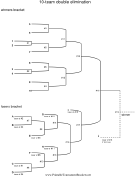
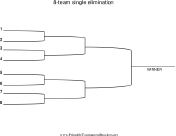
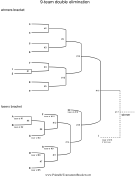
Here are the 10 most popular tournament brackets: