Principles Of Distributed Database Systems Exercise Solutions [top] 📢 📍
Still small, still fast, now on debian 13 trixie.
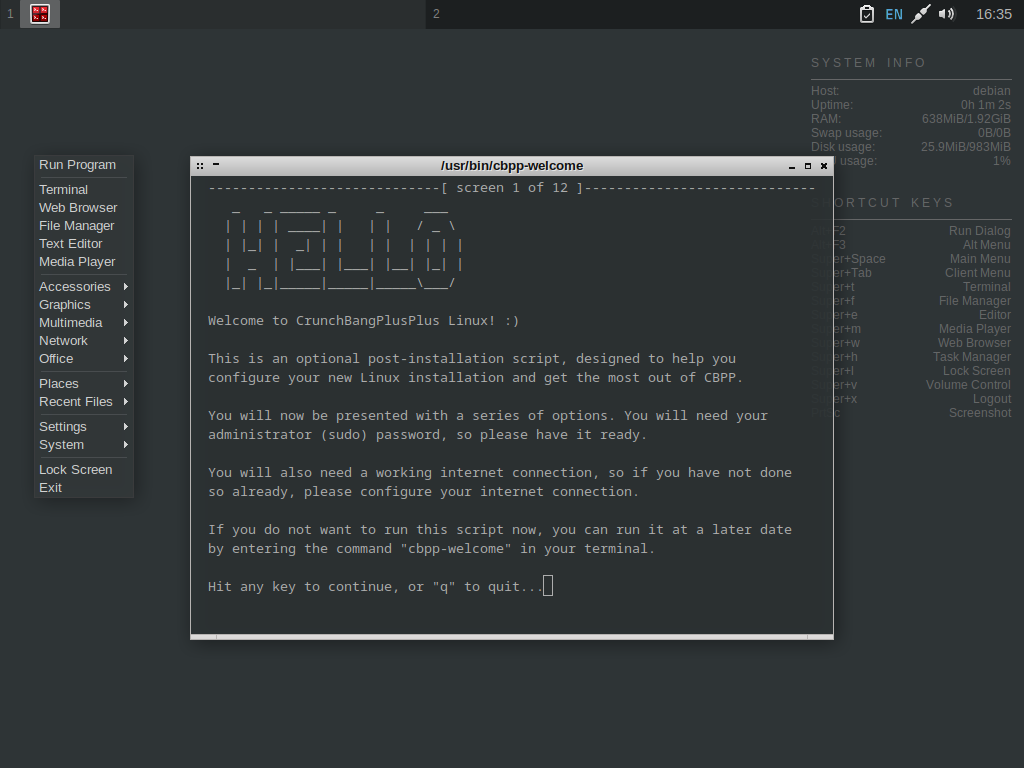
Still small, still fast, now on debian 13 trixie.
New to #!++ 13
After 10 WHOLE YEARS of #!++, you know what to expect. Still small, still fast, but now with newer packages!
No data is lost. Every item in Users exists in at least one fragment.
for the 4th edition. While the full manual is restricted, this site is the most reliable source for: Solutions to Selected Exercises
If all vote "Yes," the coordinator sends a "Global Commit." If any vote "No" or timeout, it sends a "Global Abort."
Elara frowned. "But we need consistency, Silas. We can't have one customer getting their pancakes while another is told they're out of stock when they're not."
Draw directed edges representing conflicts (e.g., read-write, write-read, write-write conflicts).
This article serves as a guide to solving these critical exercises, breaking down key chapters, key concepts, and providing practical approaches to exercise solutions. 1. Introduction to Distributed Database Concepts
Professor Tanaka's voice echoed from a memory: "The best solution to a distributed systems problem is the one you don't have to deploy. The second best is the one that survives first contact with the enemy—which is always the network, the clock, or your own hubris."
experiences an immediate hardware crash before it can write or send its vote. The Coordinator times out waiting for P3cap P sub 3
9/10 average rating on distrowatch.
No data is lost. Every item in Users exists in at least one fragment.
for the 4th edition. While the full manual is restricted, this site is the most reliable source for: Solutions to Selected Exercises No data is lost
If all vote "Yes," the coordinator sends a "Global Commit." If any vote "No" or timeout, it sends a "Global Abort."
Elara frowned. "But we need consistency, Silas. We can't have one customer getting their pancakes while another is told they're out of stock when they're not." While the full manual is restricted, this site
Draw directed edges representing conflicts (e.g., read-write, write-read, write-write conflicts).
This article serves as a guide to solving these critical exercises, breaking down key chapters, key concepts, and providing practical approaches to exercise solutions. 1. Introduction to Distributed Database Concepts This article serves as a guide to solving
Professor Tanaka's voice echoed from a memory: "The best solution to a distributed systems problem is the one you don't have to deploy. The second best is the one that survives first contact with the enemy—which is always the network, the clock, or your own hubris."
experiences an immediate hardware crash before it can write or send its vote. The Coordinator times out waiting for P3cap P sub 3